
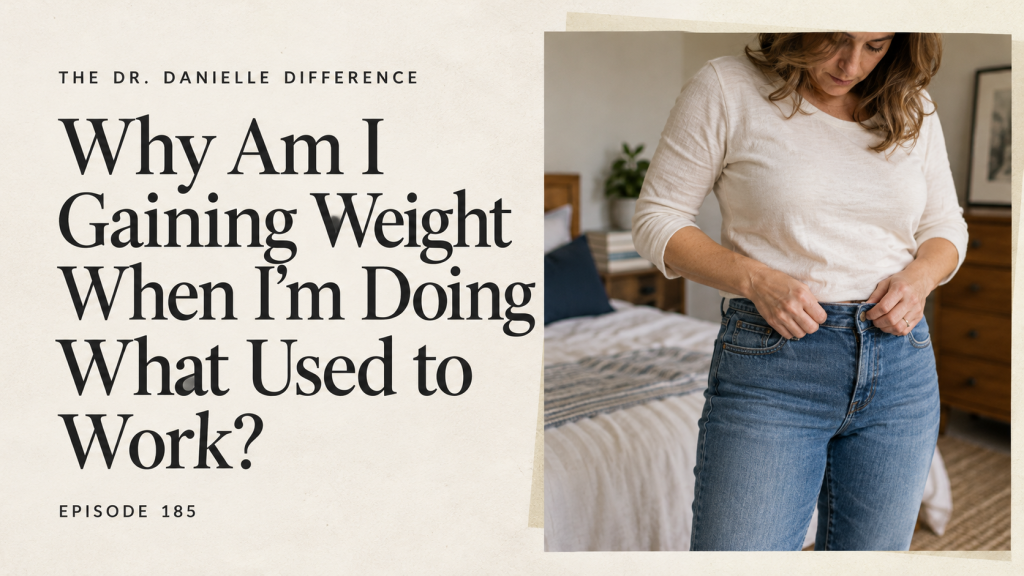
You’re getting dressed, and the jeans that fit a few months ago are doing something completely different now. You pull them up, turn sideways, and start going through the list in your head. I’m eating better. I’m walking. I bought the freaking protein. I’m doing the thing. So why is my body changing?
Maybe the scale has gone up. Maybe it hasn’t changed much, but your clothes fit differently. Either way, you’re frustrated because you cannot figure out what else you’re supposed to do. You used to be able to cut back for a little while, get back into your routine, and feel better. Now you’re wondering whether you need to eat even less or exercise even more, when you barely have the time or energy for what you’re already doing.
When you tell me you’re trying, I believe you. I believe you’re buying better food and trying to make time to move. I also believe you’re tired of spending your money and energy on things that were supposed to help. But “I’m doing everything right” doesn’t give us enough information to help you. We need to get specific about your day, what has changed, and what your body is doing right now.
You can take responsibility for looking at your patterns and still need medical care. Those things can happen together. Here are five places I want you to look.
1. What does eating well actually look like across your day?
Say you wake up, make your coffee, and get everybody moving. You realize you haven’t eaten, but you’re busy, so you keep going. You eat a few bites while packing a lunch. Later, you grab a protein bar because you bought those on purpose and you know you need protein. Then you make a beautiful dinner with meat and vegetables, and after dinner you’re back in the pantry because you still want something.
When someone asks what you ate, you remember that dinner. Of course you do. You planned it. You thawed the meat. You cooked it. You washed the freaking dishes. The little things you ate while doing something else may not have registered the same way.
That is why I want to know when you’re eating, whether you’re able to sit down to meals, what happens after dinner, and what your weekend looks like. Where you buy your groceries doesn’t tell me how consistently you feed yourself or whether your meals are satisfying.
Some women need help noticing food they eat on autopilot. Others need help building meals because they keep getting to dinner hungry and overwhelmed. Some are eating regular meals and paying attention to portions, and their symptoms and health history still need further assessment. We don’t get to hand every woman the same explanation because it makes a nice social media post.
Before you decide you have no discipline because you ended up eating in the kitchen at night, look at what happened before dinner. Had you eaten lunch? Were you hungry? Were you overwhelmed? Was the kitchen finally quiet, and you didn’t know what else to do with yourself? Those details matter when we decide what support you need.
2. What are you asking your body to do?
If you’re walking, keep giving yourself credit for walking. Getting outside, walking around the house while you’re on the phone, and making time to move all matter. I also want to know whether you’re doing anything to build and maintain strength.
What do you want your body to be able to do? Carry groceries? Get off the floor? Pick something up without needing help? Go on a trip and enjoy the walking? Those are things worth training for. They give you something useful to notice beyond whether you burned enough calories to feel allowed to eat dinner.
Then look at the hours outside your workout. If you exercise a few times a week and spend most of the rest of your time sitting, that belongs in the conversation too. Can you walk for a few minutes between tasks? Take a phone call while moving? Go on a short walk with your family?
Your starting point needs to fit your capacity and any limitations you’re working with. If you have pain or an injury, get help choosing what is appropriate. There is no prize for forcing your way through a workout and being unable to move for the next week. We need a starting point you can build on.
3. Where are sleep and stress showing up?
Food can feel easier to change than your schedule. You can buy different groceries. It is a lot harder to admit that you’re staying up late because nighttime is the only time nobody is asking you for anything.
The house is finally quiet. You sit down and open your phone because you just want a few minutes to yourself. Then those minutes become an hour. You know you have to get up early, but you don’t want to give up the first part of the day that felt like yours.
I need you to pay attention to that. You do need space in your life. If the only way you get it is by taking it out of the hours you could sleep, we have something else to work through. Your plan has to account for the woman who barely slept, forgot to pack lunch, and had somebody add another thing to her calendar.
I also want to know whether you have the opportunity to sleep and still cannot sleep. Are you waking up hot? Having night sweats? Dealing with pain? Waking repeatedly? Bring those symptoms into a clinical conversation. Telling you to put your phone away does not answer those questions.
And get specific about stress. Is it work? Caregiving? Saying yes when you don’t have the capacity? Feeling like you’re always behind? Expecting yourself to keep going without ever being cared for? Those details help us understand the life your health plan needs to work within.
4. What changed besides the number on the scale?
You may already have typed these questions into Google: Is it perimenopause? Is it my thyroid? Is it insulin resistance? Is it something I’m taking?
Bring the rest of your symptoms with you when you ask those questions. When did this begin? Did your sleep change? Your cycle? Your energy? Did you start a medicine or supplement? Did an injury change how much you could move?
Symptoms can give us reasons to investigate. They do not confirm a diagnosis on their own. Appropriate testing and clinical assessment matter. Please don’t diagnose yourself from a checklist and buy something because the bottle says “thyroid support.”
Some women push themselves harder while brushing off symptoms because they assume everything comes down to habits. I want you to take your symptoms and your habits seriously. Rapid or persistent unexplained changes deserve clinical review. You do not have to get everything dialed in on your own before you ask for help.
5. What would getting better actually look like?
If I took the scale out of your bathroom for a little while, how would you tell me you were doing? Would you talk about your clothes, your energy, your strength, or your sleep? Would you tell me you can get through the afternoon without needing a nap?
If you want to lose weight, you’re allowed to say that. If you want to feel comfortable in your clothes, say that too. I want us to know what you mean so we can be useful in our approach.
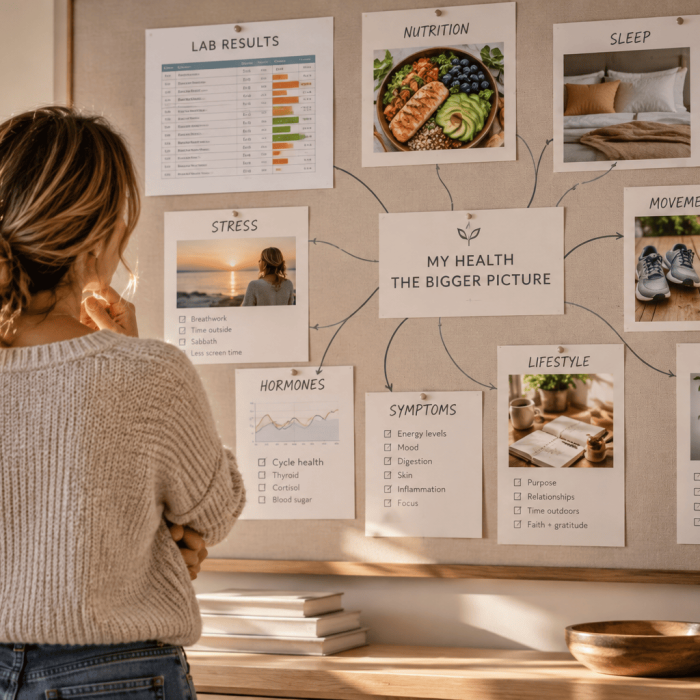
If you’re doing more in your strength workouts, eating more consistently, and noticing better energy, pay attention to those changes while we investigate the weight question. The scale alone does not describe your symptoms, your strength, or how your clothes fit. I care about whether you can be present with your family, do your work, serve your community, and enjoy the places you’re going.
Take an honest inventory for seven days
Use a notebook or a note on your phone, something you’ll actually open. Write down what you eat and when you eat it. Include drinks, bites while cooking, and what happens after dinner. Notice hunger, satisfaction, energy, movement, bedtime, sleep, and symptoms that stand out. Write things down in the moment so you have enough detail to recognize the day later.
“Busy day, ate healthy” doesn’t give you much to work with. “Had coffee, first meal at 1:00, got hungry while making dinner, stayed up until midnight” gives you something you can look at.
Resist the urge to become a completely different person just because you know you’re writing it down. We need to see what happens when your workday runs late, somebody needs you at the last minute, or the weekend goes funky. That is the life we need to work with.
Then choose a next step based on a pattern you actually see. Maybe you need to make time for a satisfying meal. Maybe you need help with strength training or with protecting time to sleep. Maybe your symptoms need further assessment. You don’t need twelve new rules before you’ve even looked at what is happening.
Get the guide, and let’s put the pieces together
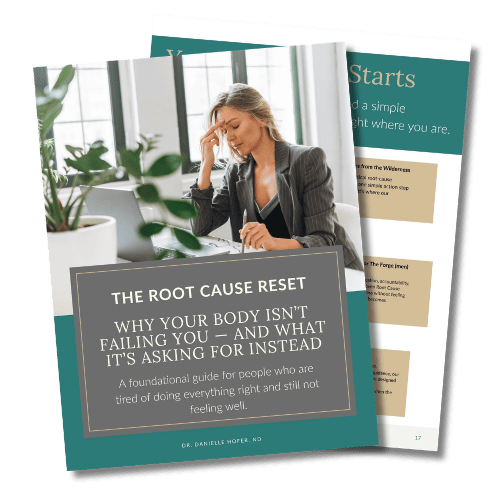
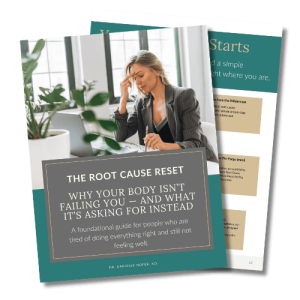
Subscribe to my free Substack to receive Why Am I Gaining Weight When I Think I’m Doing Everything Right? Read it and use it alongside your inventory.
Subscribe here: https://drdaniellend.substack.com/
Already subscribed but haven’t received the guide? Email hello@wildernessofwellness.com, and my team can help.
If you need support applying this to your actual life, explore Women’s Wellness inside Wilderness of Wellness. We work on the foundations through education, coaching, and accountability, and you can learn from the questions other women are asking too. Sometimes somebody else finally puts words to the thing you’ve been struggling with.
Listen to episode 185 of The Dr. Danielle Difference
Share it with someone who needs this conversation. Let’s lock shields and move forward together.